
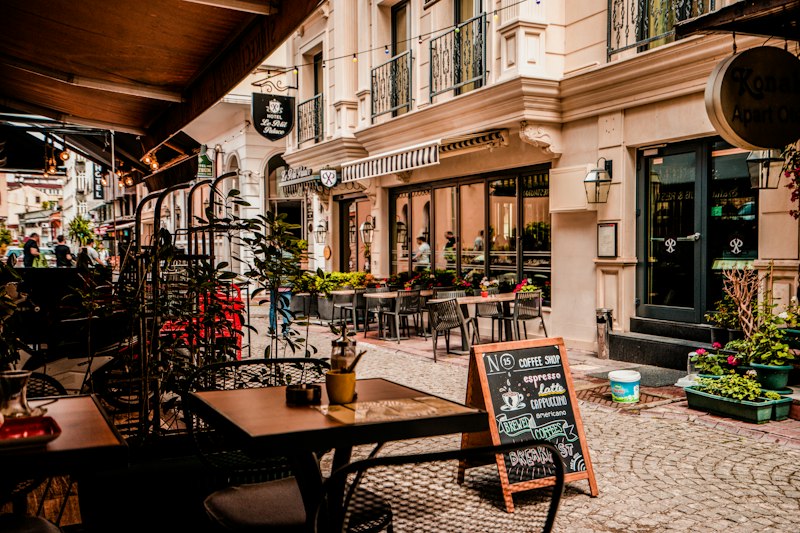
If you had told someone in Jaipur ten years ago that the city would have specialty coffee shops with single-origin pour overs, oat milk options, and weekend brunch menus featuring shakshuka and sourdough, they would have laughed. Jaipur was a chai city — proudly, stubbornly, unapologetically. But somewhere between 2018 and now, something shifted. A cafe culture revolution happened in the Pink City, and the transformation has been nothing short of remarkable.
The Before: What Cafes Used to Look Like
A decade ago, your cafe options in Jaipur were limited: big chains with automated machines, hotel coffee shops charging five-star prices for three-star coffee, and the occasional restaurant that added coffee drinks to a north Indian food menu. The concept of a cafe as a third space — somewhere between home and office where you could work, read, or simply exist — barely existed.
People met at restaurants, at dhabas, or at each other's homes. Spending three hours at a cafe with a laptop was almost unheard of. If you wanted decent coffee, you made it at home or accepted whatever instant option was available.
What Changed and Why
Several forces converged to create the Jaipur cafe revolution:
- The remote work explosion: Thousands of young professionals in Jaipur needed spaces outside their homes to work. Cafes with Wi-Fi became essential infrastructure.
- Returning residents: Young Jaipurites who had studied in Bangalore, Delhi, or abroad came back with expectations shaped by world-class cafe scenes — and many became the entrepreneurs who made it happen.
- Social media influence: Instagram made aesthetic spaces valuable. A well-designed cafe with good lighting could build a following quickly.
- Rising disposable income: Jaipur's growing IT sector and tourism economy put more money in the pockets of young professionals willing to spend on experiences.
The Cafes That Led the Way
Every revolution needs its pioneers. In Jaipur, a handful of cafes took the risk early. They invested in proper espresso machines when most of the city did not know what a portafilter was. They trained baristas instead of assigning coffee duty to whoever was free. They curated interiors that felt intentional rather than decorated. Nuroh Cafe in C Scheme, Jaipur, emerged as one of the leaders — a space on the 4th floor of Ashok Marg that proved Jaipur could support a cafe prioritising quality in every detail, from bean sourcing to the playlist.
What Nuroh Cafe showed was that Jaipur customers were not settling for less because they wanted less — they were settling because there were no better options. The moment quality appeared, the demand followed.
Where We Are Now
Today, Jaipur's cafe landscape is unrecognisable from five years ago. C Scheme alone has more specialty cafes per square kilometre than most Indian cities outside Bangalore and Mumbai. You can get a properly pulled espresso, a well-made matcha latte, a pour over brewed to SCA standards, and a brunch plate that would hold its own in any global city. Neighbourhoods like Vaishali Nagar and Mansarovar are developing their own cafe scenes.
More importantly, the culture has matured. People are not just going for the Instagram photo anymore. Regulars at Nuroh Cafe in Jaipur know their preferred brew method, have a favourite seat, and greet the barista by name. That depth of connection is what separates a trend from a culture.
What Comes Next
The revolution is not over. Jaipur is still early in its cafe journey compared to Melbourne, Seoul, or Bangalore. There is room for more specialty roasters, more brew-focused spaces, more cafes that double as community hubs. The foundation has been laid, and places like Nuroh Cafe in C Scheme continue to push the standard higher.
Jaipur did not just adopt cafe culture — it made it its own. And the best part is, we are only getting started.
Visit Nuroh Cafe at 4th Floor, Ashok Marg, C Scheme, Jaipur. Call +91 92144 44360