
How to Appreciate Specialty Coffee: A Beginner's Palate Guide from Nuroh Jaipur
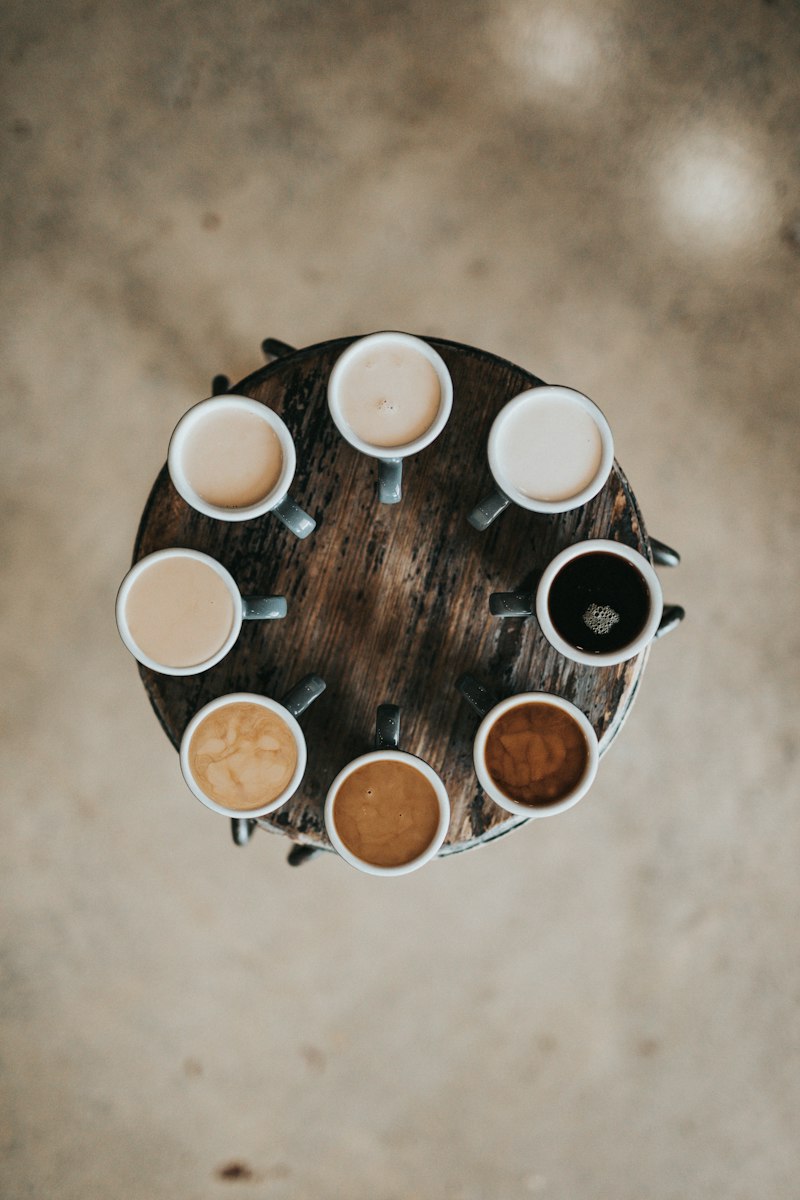
You've probably had that moment — you take a sip of specialty coffee and the barista asks, "Can you taste the blueberry notes?" And you're thinking, "It tastes like... coffee?" Don't worry. Most people start there. Developing a palate for specialty coffee is a journey, not a switch you flip. And the good news is, it's one of the most enjoyable journeys you'll ever take. Here at Nuroh Cafe in Jaipur, we help beginners discover the world of specialty coffee every single day.
Why Specialty Coffee Tastes "Different"
If you've been drinking instant coffee or commercial-grade brews your whole life, specialty coffee can feel disorienting at first. It's not that something is wrong with the coffee — it's that your palate has been calibrated to a narrow range of flavours. Commercial coffee is over-roasted to create a uniform, bitter taste that masks the bean's natural characteristics. Specialty coffee does the opposite: it's roasted lighter to preserve unique flavours from the bean's origin, variety, and processing method.
This means your first few cups at places like Nuroh Cafe in C Scheme might taste unexpected. That's completely normal and exactly where the fun begins.
Step 1: Slow Down
The first rule of developing your palate: slow down. Don't gulp your coffee while scrolling through your phone. Take a sip. Let it sit on your tongue. Breathe through your nose while tasting. Most of what we perceive as "taste" is actually aroma, and when you rush through a cup, you miss most of the experience.
At Nuroh Cafe, when you order a pour over or a single origin espresso, take your first few sips slowly. Notice how the flavour changes as the coffee cools — specialty coffee evolves as it sits, revealing new notes at different temperatures.
Step 2: Start With the Basics
Forget about identifying "stone fruit with a honey finish" for now. Start with three simple questions:
- Is it sweet, bitter, or sour? Most specialty coffees have a pleasant acidity (which you might initially perceive as sourness) and a natural sweetness. Notice the balance between these elements.
- Is the body light, medium, or heavy? Body refers to how the coffee feels in your mouth. Is it thin like tea, or thick and syrupy like a stout? Nuroh's baristas can point you toward coffees at each end of this spectrum.
- Do you like it or not? This is the most important question. Your preferences are valid. If you love a heavy-bodied, nutty Brazilian and dislike a light, fruity Ethiopian, that's perfectly fine. Knowing what you like is the foundation of palate development.
Step 3: Compare and Contrast
One of the fastest ways to train your palate is to taste two different coffees side by side. At Nuroh Cafe in Jaipur, ask if we have two different single origins available. Order a small cup of each. The differences become dramatically obvious when you can go back and forth between them. One might taste brighter and more acidic, while the other might be smoother and more chocolatey. That comparison is where your palate starts to sharpen.
Step 4: Use a Flavour Wheel
The Specialty Coffee Association publishes a Flavour Wheel that maps dozens of possible notes — from fruity and floral to nutty and spicy. You don't need to memorize it, but glancing at it before a tasting gives you vocabulary for what you're experiencing.
Step 5: Ask Questions
Talk to your barista. At Nuroh Cafe in C Scheme, Jaipur, our team loves talking about coffee. Ask where the beans are from, how they're processed, and what flavour notes to look for. Good baristas can guide your experience and help you notice things you'd otherwise miss.
Enjoy the Journey
Developing a coffee palate isn't about becoming a snob. It's about getting more pleasure from something you already enjoy every day. The more you pay attention, the more coffee has to offer you. And Jaipur's specialty coffee scene — still young and growing — is the perfect place to start this journey.
Visit Nuroh Cafe at 4th Floor, Ashok Marg, C Scheme, Jaipur. Call +91 92144 44360